ZeroUSV has launched a Slocum glider from an autonomous USV for the first time in a demonstration supporting the Royal Navy’s Atlantic Bastion programme.
The milestone demonstrates how autonomous USV can act as launch and support platforms for long-endurance underwater systems, reducing the need for larger crewed ships during subsea operations.
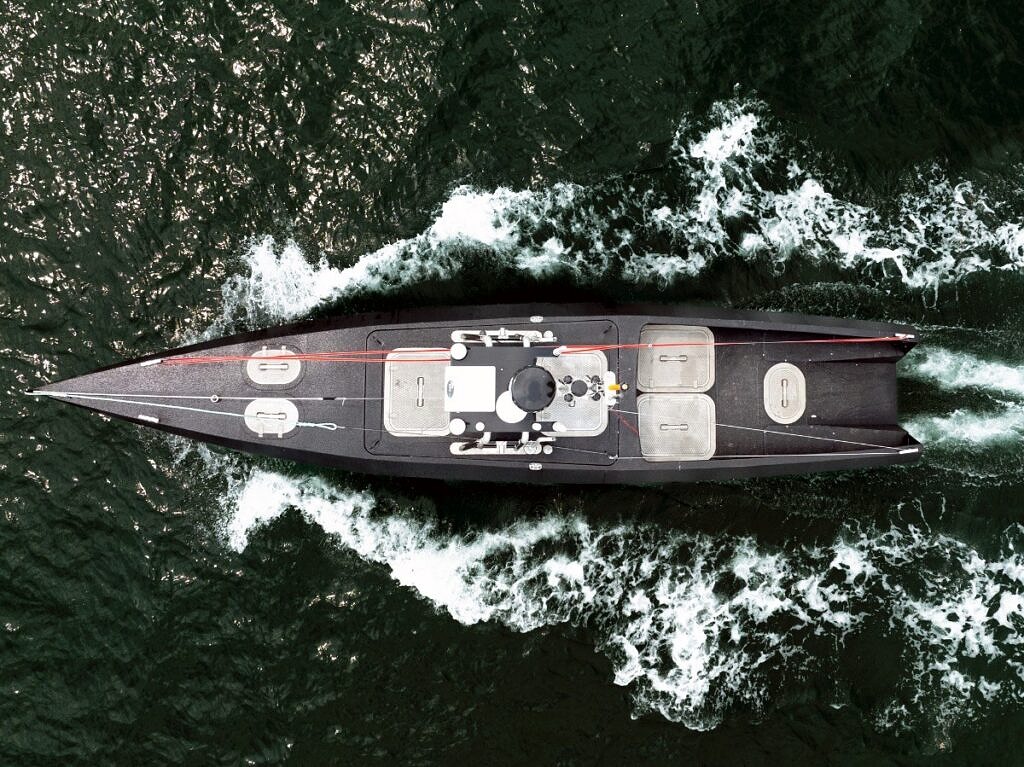
The launch of the Teledyne Slocum Glider was conducted from a ZeroUSV Oceanus12 USV, which operated as the autonomous host platform for subsea technology provided by Teledyne Marine.
The trial showed how autonomous vessels can launch and support long-endurance underwater systems without the need for larger crewed ships.
Atlantic Bastion forms part of a wider UK MOD effort to explore how autonomous systems can support maritime security tasks, including subsea monitoring and the protection of critical undersea infrastructure. The programme is expected to involve multiple industry teams as capability is developed and refined.
Two Oceanus12 USVs were deployed during the demonstration as part of the wider trial activity. The event brought together several partners to explore how autonomous USVs, subsea vehicles and specialist sensors can be integrated for maritime security and subsea operations.
Matthew Ratsey, Managing Director and Co-Founder of ZeroUSV, said:
“This is an incredible milestone. For the first time, the world has seen the launching and operating of an ocean glider from an uncrewed vessel, which opens up new possibilities for persistent subsea monitoring and long-endurance operations at sea.
“This ushers in a new operational model for persistent, distributed ocean data collection, directly relevant to defence ISR, ASW and REA missions, as well as commercial and scientific oceanographic applications.”
The demonstration also reflects wider collaboration across the autonomous maritime sector. Teledyne Marine and MSubs recently announced a strategic partnership focused on integrating autonomous surface vessels, underwater vehicles and advanced sensing technologies for future naval programmes. The Oceanus platform provides a flexible host for these systems, enabling a range of subsea capabilities to be deployed from autonomous vessels.
Arnar Steingrimsson, Vice President of Sales, Marine Vehicles at Teledyne Marine, said: “The ability for our Slocum gliders to be rapidly and safely deployed into an operating area from another unmanned platforms is a major capability enhancement and opens the door for more effective and focused use of gliders and USVs especially for time sensitive defence applications like ASW, ISR or REA. We look forward to continued cooperation with MSubs and Zero USV in realizing game changing marine capability.”
The Oceanus class is designed as a modular autonomous vessel capable of supporting a wide range of sensors and subsea systems, including sonar, survey equipment and autonomous underwater vehicles. A larger platform, Oceanus17, is also in development and will offer increased payload capacity and endurance for longer missions.
ZeroUSV plans to continue demonstrating its autonomous vessel technology during 2026, including displaying the Oceanus17 platform at SeaWork in Southampton in June.
You can read more of the latest from the world of Marine here.